You Don’t Have a Sales Problem. You Have a Ratio Problem
by Sean Bear, Managing Director, Accelerate HC
A founder called me last month convinced he needed to hire two more AEs. Pipeline was slowing. Deals were stalling. Revenue was trending behind plan. His instinct was simple: more sellers, more revenue.
So we started digging in.
Where the Time Was Actually Going
It turned out his existing AEs were spending 30 to 40 percent of their time on post-sale work. Onboarding calls. Implementation questions. Customer issues that had nowhere else to go.
He didn’t have a sales problem. He had a ratio problem.
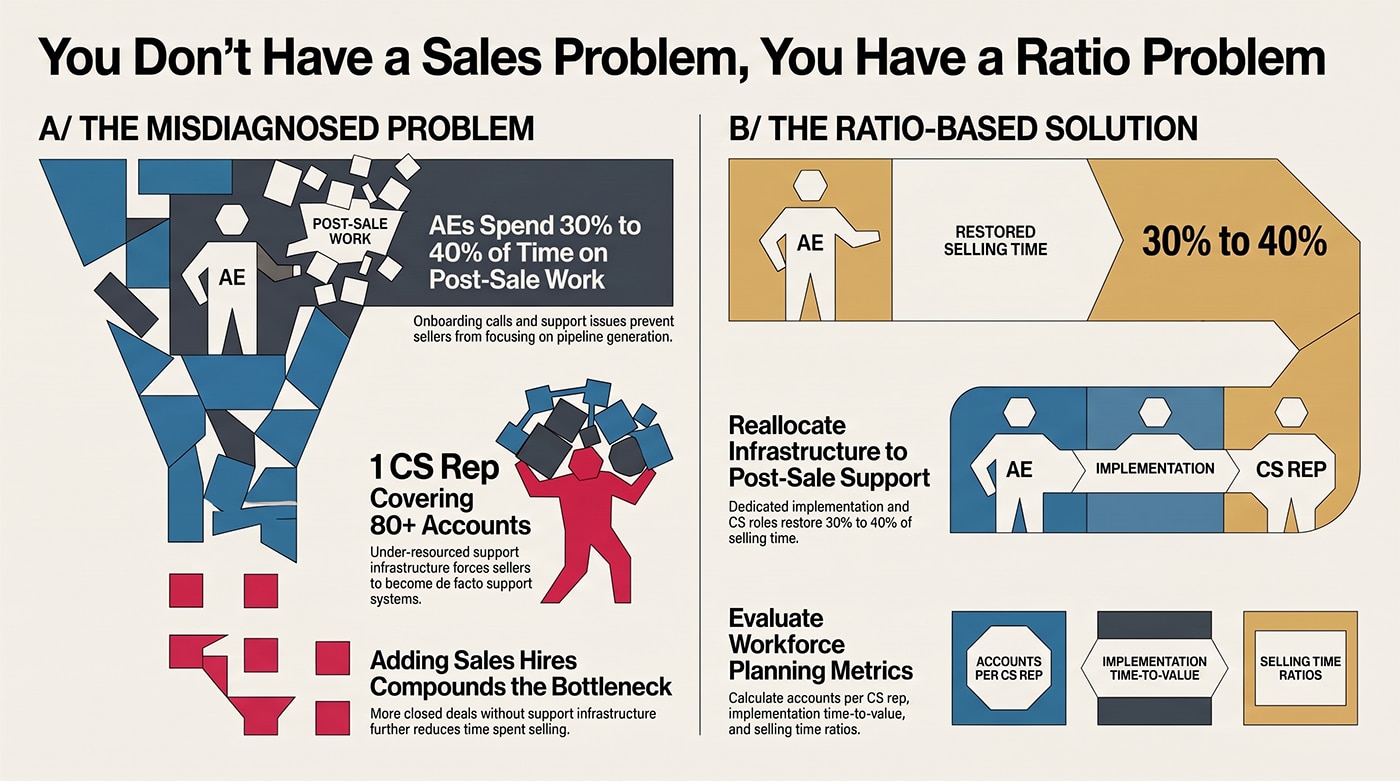
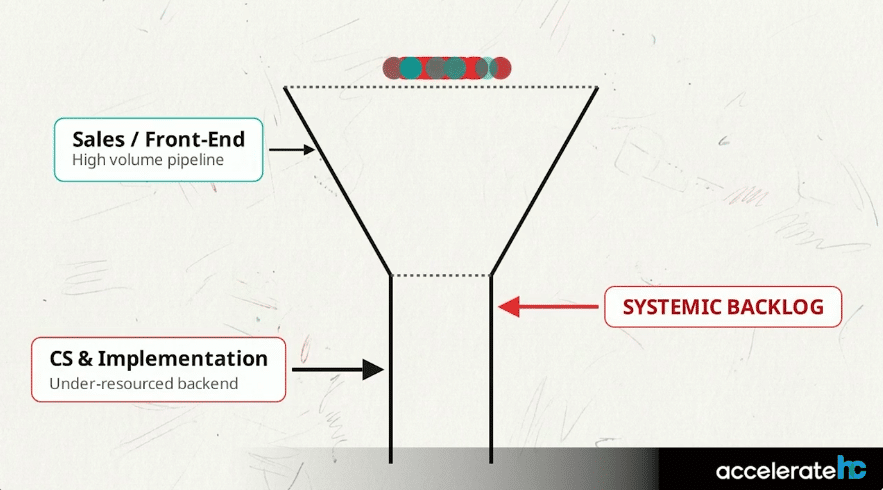
His team had scaled the front of the funnel without building the infrastructure behind it. There was no dedicated implementation resource. CS was one person covering 80+ accounts. So every time a deal closed, the seller who closed it became the de facto support system, and stopped selling.
Why More AEs Would Have Made It Worse
Two more AEs wouldn’t have fixed that. They would have made it worse. More closed deals feeding into the same broken post-sale motion means more onboarding calls landing on sellers, more customers waiting on answers, and even less time spent generating pipeline.
It’s one of the most common patterns we see in SaaS: a revenue slowdown gets diagnosed as a sales capacity issue when the real bottleneck sits downstream.
What Actually Moved the Needle
The fix was rethinking the org, not expanding it. One implementation hire. One additional CS rep. Clear handoff points between sales and post-sale.
Suddenly his existing AEs got 30 to 40 percent of their week back, and pipeline started moving again without adding a single seller.

Workforce Planning Is a Math Problem
Here’s what most founders miss about workforce planning: it’s not a headcount exercise. It’s a math problem. Before you open a new req, look at:
- Accounts per CS rep. How many customers can one person realistically support before quality slips?
- Time-to-value per implementation. How long does it take a new customer to get live, and who owns that work?
- Ratio of revenue-generating activity to everything else. What percentage of your sellers’ week is actually spent selling?
The Bottom Line
Get the math wrong and every hire after that just compounds the mistake.
Get it right and you’ll probably realize you need fewer people than you think, just in different seats.
Navigating today’s competitive tech job market requires actionable SaaS sales career advice that goes far beyond surface-level perks and base salary. When evaluating SaaS job offer opportunities, top performers must define their unique specialization—whether in new-logo acquisition or client retention—and prioritize long-term trajectory over rigid job titles. Understanding what to look for in sales role prospects means conducting thorough due diligence into product-market fit, leadership stability, financial runway, and genuine culture alignment. Ultimately, building a thriving, resilient SaaS sales career comes down to targeting meaningful impact, choosing companies that solve critical industry pain points, and focusing on sustainable professional growth over short-term vanity metrics.
Need help structuring competitive SaaS compensation? We advise on comp for every search. Hire Us.